What Makes Kasubi Tombs Unique?
Kasubi Royal Tombs is one of Uganda’s remarkable cultural sites that attract visitors especially cultural enthusiasts to come and witness the country’s rich cultural heritage. It is a UNESCO World Heritage Site, situated 5 kilometers away from the bustling Kampala City on Kasubi hill.
This unique landmark is a burial ground and home to the former four Kabakas of Buganda. Besides being the burial grounds for the last Kabakas of Buganda, princes are also buried at the back of the main building. This cultural site was built in 13th century, and also part of the 31 royal tombs scattered across the Buganda Kingdom.
Other tombs are smaller compared to the Kasubi Royal Tombs, and are found in places like Singo, Kyaggwe, Kyadondo, Busiro, and others. However, Kasubi tombs stand out as the most significant historical, spiritual, and cultural site for not only the Buganda subjects but Africa at large, making it one of the prominent heritage sites in Uganda.
What makes Kasubi Tombs Unique?
This is attributed to its tradition and national value in terms of cultural heritage, hence became a protected site by Ugandan Law in 1972 despite remaining registered as Buganda’s property. Therefore, the Kasubi Royal Tombs became a UNESCO World Heritage Site way back in 2001, it was declared by UNESCO as the largest grass-thatched house in the whole world and is one of the most visited sites across the country.
Muzibu- Azaala- Mpanga
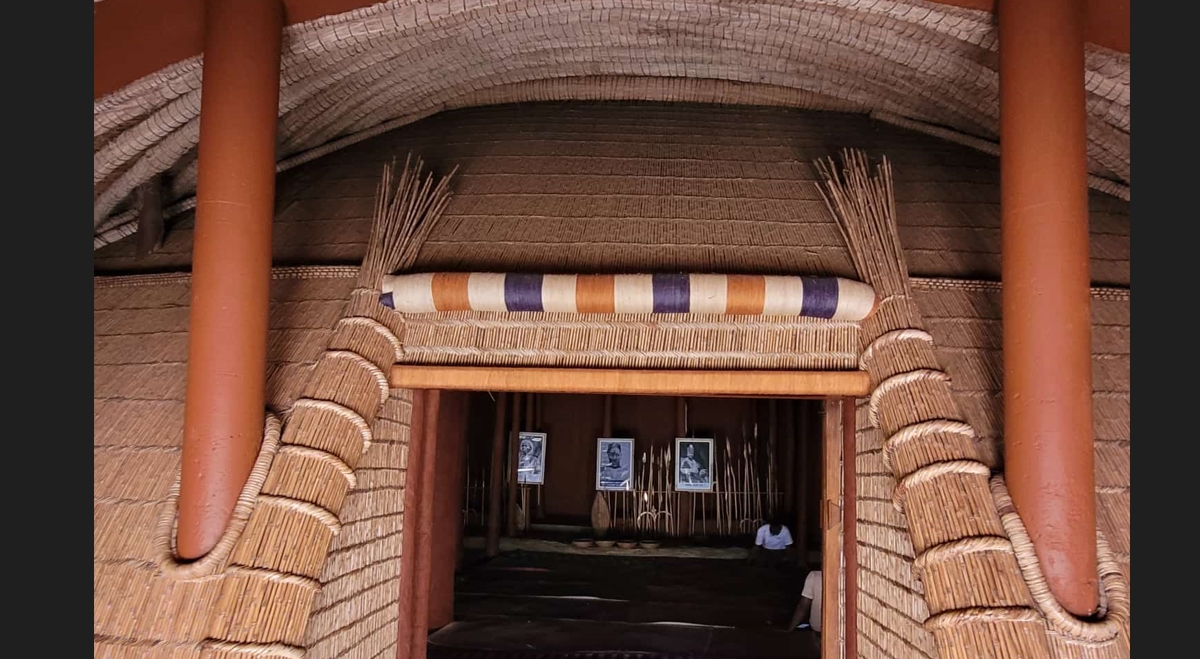
At Kasubi Royal tombs, the Muzibu- Azaala- Mpanga is an awesome master piece of the site tapestry in terms of traditional architecture, making it the largest grass thatched building globally. It has the intrnal height og 9.5 meters and the external diameter is 31 meters. Its internal structure especially the main tomb is made up of local stiff and pliable materials such as grass and bamboo and others. The ceiling is mad out of the rings that signify the clans of Buganda kingdom.
This main grass thatched building has under gone several transformations and was initially the palace of Kabaka Muteesa 1, the 30th King of Buganda, but after his death in 1884 it was turned into a tomb. After his death, his successors chose not to follow a custom requiring them to be buried in their own palace based on the areas of residence and were laid to rest at the Kasubi tombs.
Main Sections at the tombs
These Royal tombs are split into 3 main sections. The first being the main structure on the western side, housing the tombs of the four Kings. This is followed by the behind section of the main structure with several grave yards where the other royals ore buried and smaller buildings. Lastly is an open section of the farmland that supports members of the royal family and the site care takers with food.
At the reception, a wooden gate Bujjabukula crafted in woven reeds and grass-thatched roof welcome visitors to this heritage site. Traditional site guards are always positioned at the entrance and towards the courtyard close to the Ndoga- Obukaba, a small round house and home to the traditional drums.
As you get into the main courtyard, you will be in position to see the smaller grass thatched houses that were built for the Kings wives, the spiritual guardian Nalinya, her deputies, and other members from the buganda royal family. Before the writing of this article, Beatrice Namikka was the guardian but recently got sacked by the Kabaka after the fires that engulfed the tombs in 2010/03/16
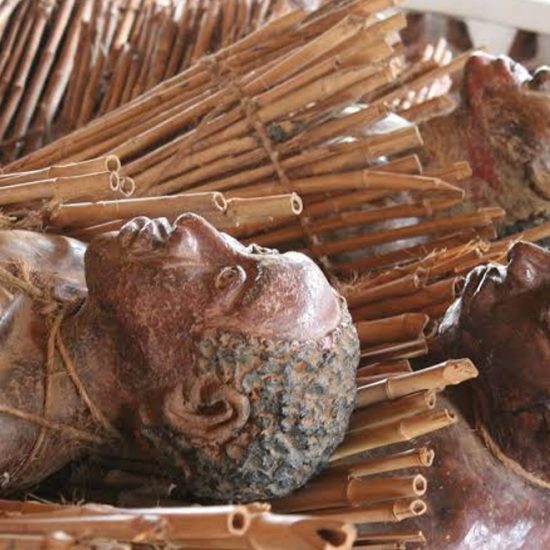
The site walls at the main structure are crafted with the bark cloth and several woven mats where visitors can sit. The photos of the Kings welcome you as the stuffed leopard skin can also be seen by visitors to the man building (Muzibu- Azaala- Mpanga). The Leopard skin is used as a representational symbol and norm where by, the leopard was Kabaka Muteesa1’s best pet.
The Pet Animal (Leopard).
After Kabaka Muteesa’s death, his Leopard became unruly and hard to control, in attempts to control it, many people lost their lives. At last, it was eventually killed, mounted, and its skin filled with material to maintain its real shape. Other common items include rings of spears holding the roof together, where each represents 52 clans of Buganda.
More still, each clan has an onus to perform in the palace. For instance, the Ngeye is responsible for maintaining the grass thatched roofs at the Kasubi Royal tombs. This knowledge and skill are passed on from one generation to another especially when clan members get older, hence enhancing the maintenance of the tombs.
Restrictions
Additionally, due to the royal norms and traditions, some sections of the tombs are sacred and not easily accessible to every one. The sacred forest commonly known as Kibira is an exclusive and a sacred area of the main structure- the Muzibu- Azaala- Mpanga, where the spirits of the Kings are believed to rest. This restricted place can only be accessed by the Katikiro of Buganda, widows of the Kings, and some members of the royal family. Surprisingly, not even the ruling Kabaka can go there.
As part of the traditions, 4 rooms are built next to the Kibira (forest) sheltering the four wives of the dead Kabakas (kings). Here, each dead Kabaka has a living wife, with the task of looking after the departed Kabaka. The wives are selected from the clans of the dead Queens. Actually all the roles performed in the Kasubi tombs are hereditary right from the royal guards, the chief drummer and many others. Dear travelers, Kasubi Royal Tombs is a MUST visit. kindly book with Ganda Cultural Expeditions for the best cultural experience.