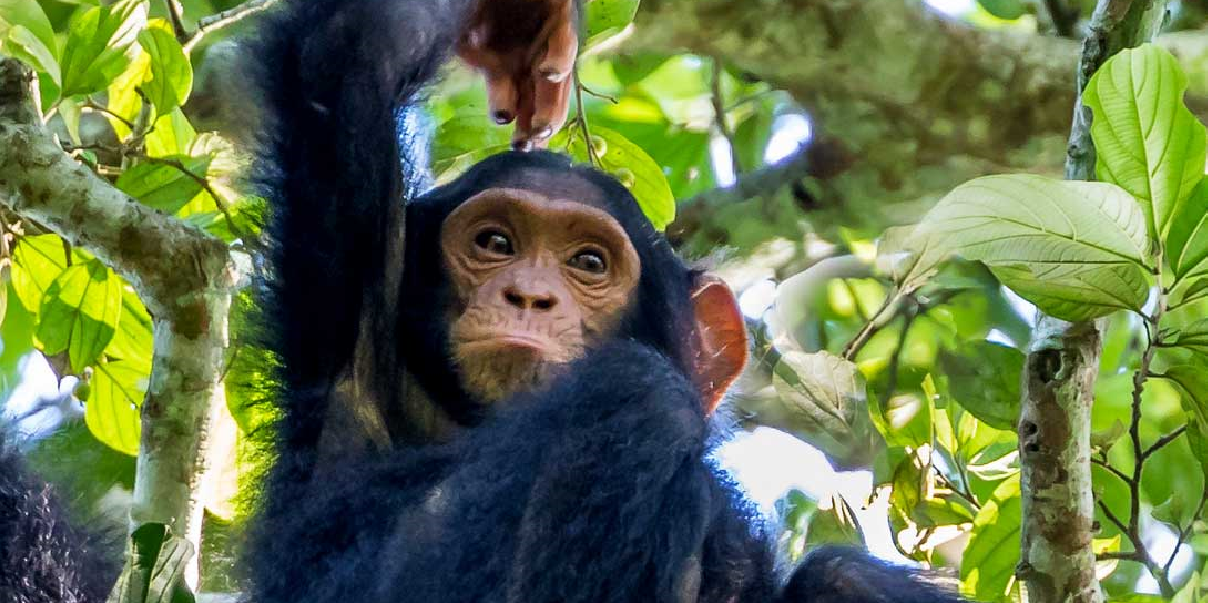
Kibale National Park: Africa’s Primate Capital.
Besides being referred to as the primate capital of the world, Kibale Forest National still standout as Africa’s primate capital due to its numerous primate species. With over 13 resident primate species and its unique ecosystem, Kibale Forest National Park has continued to draw tourists across the world to come and witness the magical adventure experiences particularly the magical chimpanzees.
Every primatologist, genuine wildlife filmmaker, or guide who has actually worked with wild chimpanzees in East and Central Africa will agree that Kibale National Park is the standard. About 1,450 chimpanzees live in Kibale Forest, a 795-square-kilometer area of tropical forest in the Fort Portal district of western Uganda.
This is one of the greatest populations of chimpanzees on the planet. Due to decades of patient research, some chimpanzee communities in Kibale Forest have become accustomed to human presence, making interactions here some of the most consistently close on the continent.
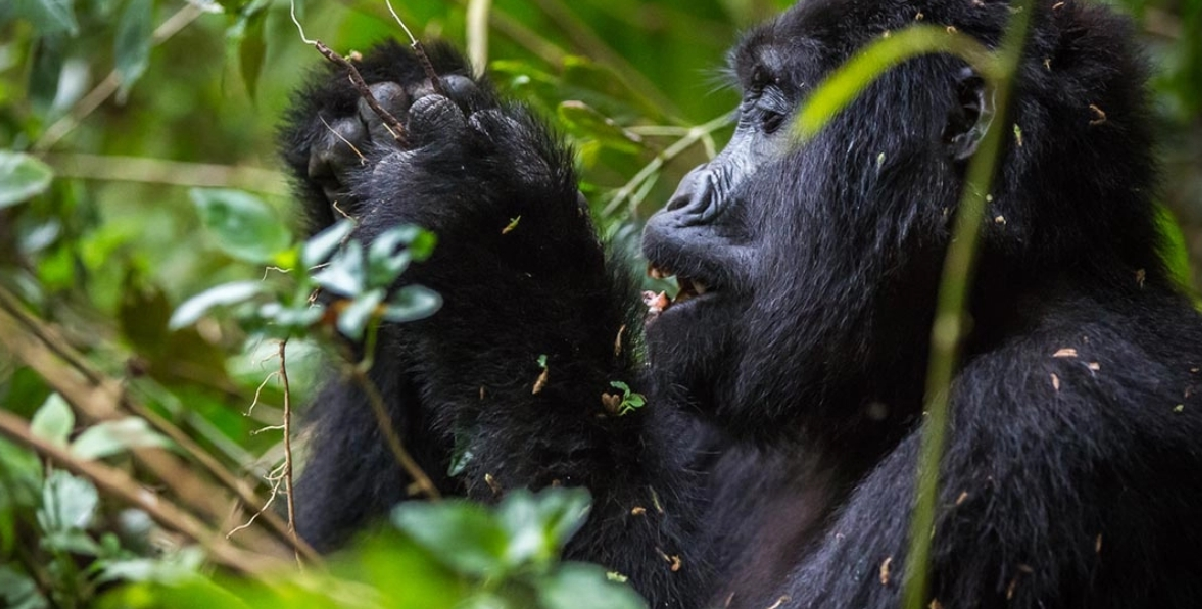
The Kanyanchu community, a substantial, extensively studied, and exceptionally insightful group to observe, is the main focus of standard chimpanzee tracking. These animals are not entertaining audiences. They are going about their daily lives, calling to other members of their group over great distances through the forest, foraging, socialising, grooming, punishing juveniles, and competing for status.
A chimpanzee that has been accustomed to you will look at you in the same way that a city dweller looks at a passing stranger: a quick, heartless acknowledgement, followed by a return to the more pressing matter at hand. The experience is particularly impactful because of such behaviour. Their universe is not centered around you. They are at ease knowing that you are just there.
The Chimpanzee Trekking in Kibale Forest
On a daily basis, Kibale chimpanzee treks take place in two sessions: an 8:00 AM morning trek and a 2:00 PM afternoon trek. Since chimpanzees are most active in the early hours and are more likely to be moving, foraging, and vocalising loudly, the morning session is often regarded as the best. Trekking in the afternoon can be just as rewarding, especially during the cooler months when the chimpanzees are active later in the day. However, if you can, schedule the morning trip.
Before accessing the forest with UWA ranger-guides, permit holders congregate at the Kanyanchu tourist centre for a briefing. The approximate location of the village will already be known to trackers who have been in the forest since dawn light.
Depending on where the community has spent the night, the trip to the chimps can take anything from twenty minutes to two hours. Compared to Bwindi, the landscape of Kibale is milder, with mostly level terrain, well-kept forest trails, and a forest canopy that opens out into swamp forest and secondary growth patches. Although some areas get muddy during the rainy season and waterproof boots are recommended, Kibale is actually accessible to people of all fitness levels.
The hour begins when you get to the community since observing chimpanzees in the wild requires a different level of focus than observing big beasts on an open plain. You are tracking activity through the canopy, following sound as much as sight, and looking up as much as ahead. Until it makes a sound, a silverback chimpanzee travelling through the mid-canopy is remarkably silent. Adult male confrontations, speedy predatory chases, and dramatic territorial displays all arrive without warning and end as fast as they start. The noises of the community conversing across long distances, the rhythm of the forest, and the sight of a woman moving with a baby clinging to her back are what give those moments their type of profundity.
What is the best time to Visit Kibale National Park?
When planning for your primate safari in Uganda’s Kibale Forest National Park, the park can be visited at any time of the year but the dry months of June, July and August offers the best experience. This is the dry season where the park receives little to no rainfall, however Kibale Forest, being a tropical rain forest, expect rain at any time of the day. During this period the roads connecting to the park are always in good condition, making it easier to access the park premises and navigable trekking trails.
The vegetation is always thin and clear offering higher visibility for wildlife species. However, travellers can still make it during the wet season which runs from March to May and September to November, though it is subject to heavy rains leading to poor roads.
Where to stay in Kibale Forest National Park
Travelers planning to visit Kibale Forest National Park especially those who may wish to spend a night or more should not worry about where to stay. The park has luxury, mid-range and budget options for different categories of travellers. Some of these lodges include Chimpundu Lodge, Primate Lodge, Kibale Lodge, Kibale Forest Lodge, Isunga Lodge, Guereza Canopy Lodge, Kibale Forest Camp, Kibale Chimps View, Crater Safari Lodge, Kibale Tourist Lodge, Turaco Tree Tops, and many others. Ganda Cultural Expeditions is readily available o take you throughout your adventure.