
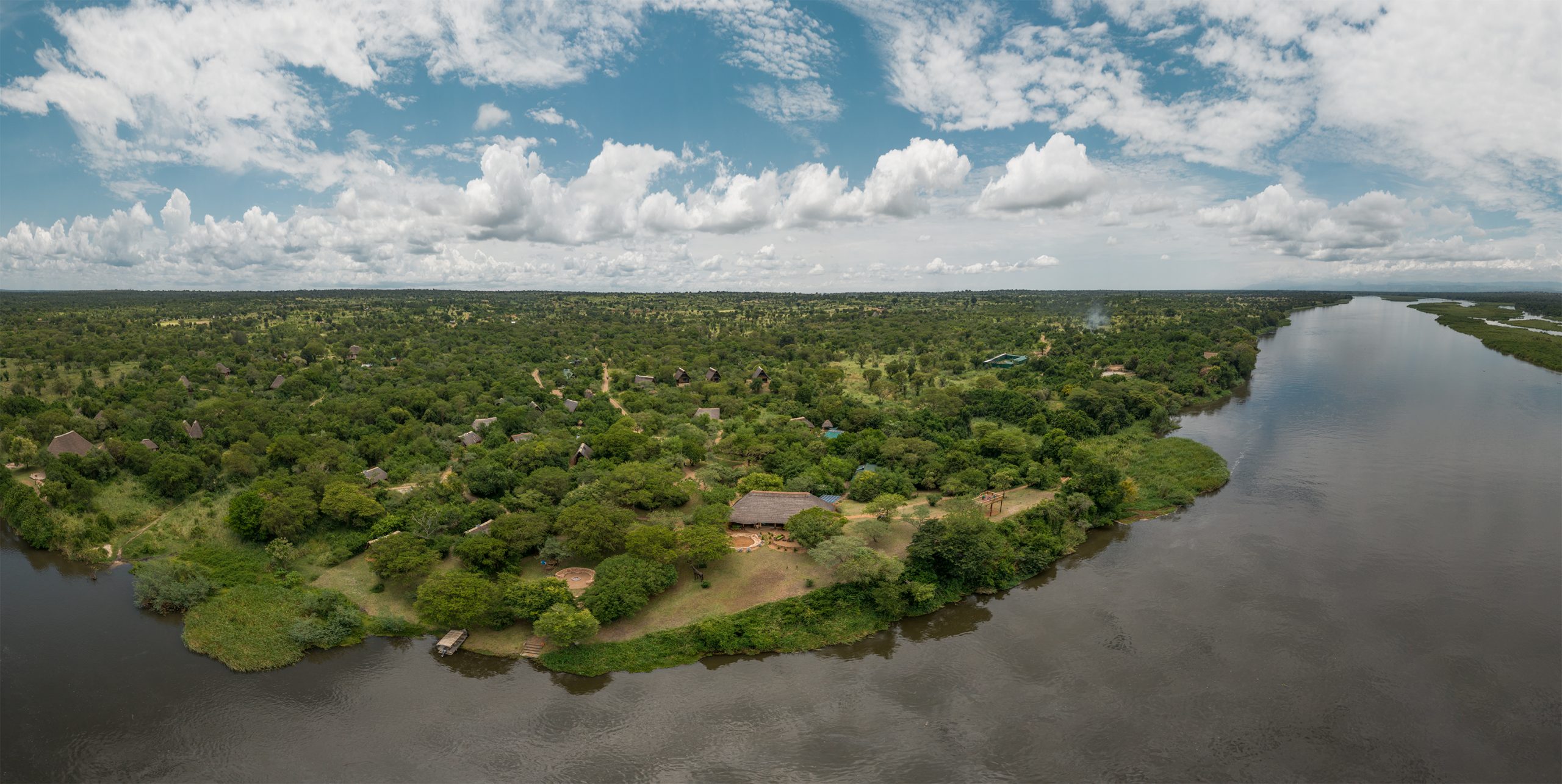

The Biodiversity of Queen Elizabeth National Park
Queen Elizabeth National Park is a unique destination due to its biodiversity, which includes savannah, woodland, acacia, and tropical rainforests. The park hosts a variety of animal species, including the big four mammals among Uganda’s big five lions, buffaloes, elephants, and leopards. These four big mammals appeal to nature lovers who wish to have close encounters with them.
The Kazinga Channel of about 40 km that connects Lake Edward and Lake George is also a unique feature of the park. The concentration of various animals, such as hippo herds, buffaloes, and elephants, at the shores of the Kazinga Channel has also provided a unique element in the park, hence making it attractive.
The park is situated in the southwestern part of Uganda, covering the districts of Kasese, Kamwenge, Rubirizi, and Rukungiri. To get to the park, travelers usually cover about 400 kilometers from Kampala via the Masaka-Mbarara road; however, they can also take the Mityana-Mubende-Portal Road, as both routes lead to the same destination. On the way to Queen Elizabeth National Park, visitors will enjoy the scenic views of the region.
History of the park.
The park was established in 1952; before, it was known as Kazinga National Park. Its renaming followed after the visit of Queen Elizabeth II of England. Before the establishment, the area was a traditional hunting ground for the locals, and later, they combined Lake Edward and Lake George game reserves, which were established in 1925 by the colonial government.
The discovery of tsetse flies and the subsequent epidemic of sleeping sickness and rinderpest led to the abandonment of the hunting ground, hence paving the way for the conservation efforts.
Biodiversity and wildlife.
Queen Elizabeth National Park has a remarkable diversity of ecosystems, favoring a wide range of flora and fauna, hence being designated as a UNESCO biosphere reserve. Its various habitats, such as grasslands, swamps, volcanic craters, acacia woodland, and semi-deciduous tropical forests, make it one of the most biodiverse areas in the world.
The park is home to a spectacular variety of mammal species. Over 450 animals are recorded in the park; among them are the four most attractive mammals of the big five animals, such as the lions, leopards, buffaloes, and elephants. Other animals include the giant forest hog, waterbuck, the handsome Uganda kob, warthog, hyena, bush pigs, and many others.
The park also hosts a massive population of hippos, which can often be seen in and along the Kazinga Channel. The Inshasha sector is famously known for its tree-climbing lions with their unique behavior, where they lounge in fig trees to escape the heat or insects.
The Kyambura Gorge is famously known as the valley of apes and is home to a small community of chimpanzees. Other primates like the black and white colobus monkey, red-tailed monkey, and baboons also live in the forests.
The Kazinga Channel is a great place to see Nile crocodiles basking in the sun. The park is also home to other reptiles like the western hinged tortoise and monitor lizards.
Birdlife.
Queen Elizabeth National Park is a habitat for over 600 bird species, making it the leading bird destination among the parks in Uganda.
Aquatic bird species that can be seen along the Kazinga Channel include the African fish eagle, pelicans, and various kingfishers.
Wetland species. The wetlands are home to several species, including the rare shoebill stork. The salt crater lake in Katwe also attracts flocks of colorful flamingos.
The Maramagambo forest provides a home for the bird species that are associated with the tropical forests, such as the African emerald cuckoo and the black coucal.
Vegetation.
The diverse plant life in Queen Elizabeth National Park favors the herbivores of the park.
Savanna grasslands and woodlands feature tall grasses like Themeda triandra and are dotted with trees like the candelabra succulent and various acacia species. Maramagambo Forest, which is a key habitat for primates and forest birds.
Wetlands and swamps: Papyrus swamps and wetlands flourish around Lake George and the Kazinga Channel, supporting a variety of aquatic and bird species.
What to do in Queen Elizabeth National Park.
A lot of activities are associated with the park, so a visitor can’t feel bored while staying in Queen Elizabeth National Park. Various tourism-related activities are conducted within the park, which enables tourists to fulfill their travel dreams.
Game drives.
Game drives, the activities that unlock all nature-related feelings, are conducted within the park. Usually, three game drive sessions are conducted per day, that is to say, a morning game drive, an evening game drive, and a night game drive. The Kasenyi Plains will always provide a clear experience for these activities; this is mainly due to the high concentration of various animals for grazing. There is also a higher chance of spotting lions in the Kasenyi plains since it acts as a hunting ground for predators.
For animals that might have been missed during the day, a guided night game drive is also conducted to ensure rich, full activity for the tourists. For example, one might miss out on spotting a lion during a morning game drive, but then a night game drive is conducted since there are higher chances of spotting predators at night, hence fulfilling a visitor’s dream.
Boat cruise.
This wonderful, enticing activity is conducted at Kazinga Channel. Kazinga Channel is about 40 kilometers; this link, which connects Lake Edward and Lake George, is full of experiences. Various animals are spotted on the shores of the channel for grazing, for drinking water, and for cooling purposes. For bird lovers, the channel also acts as a bird-watching site where various bird species are also spotted hanging out at the banks of the Kazinga channel, hence a great bird-watching area.
Chimpanzee Tracking.
Chimpanzee tracking. This activity involves tracing the habitats of chimpanzees and spending a little time with them, knowing their behaviors. The Kyambura Gorge, also known as the Valley of Apes, has acted as a beautiful habitat for the chimpanzees, hence favoring the trekking activities.
Bird Watching.
Queen Elizabeth National Park has already recorded over 600 bird species. Water-related bird species are spotted while on a boat cruise at Kazinga Channel, where birds like pelicans, herons, the rare shoebill stork, African fish eagles, African skimmers, African jacanas, and many others are found. In addition, the Maramagambo forest also acts as a habitat for tropical rainforest birds such as the Rwenzori turaco, white-naped pigeon, forest flycatcher, black bee-eater, African emerald cuckoo, and the rare shoebill stork.
Challenges confronting the management’s conservation efforts in Queen Elizabeth National Park.
However, a lot of effort has been invested in the conservation and maintenance of Queen Elizabeth Park, but many challenges still disrupt the park, thus slowing the growth of the country’s tourism industry.
Poaching.
The illegal killing of animals by intruders seeking meat and skins is the primary obstacle to conservation efforts. The main reason for this is a lack of awareness about the benefits these animals bring to tourism activities.
Wildlife-human conflicts
This comes in a way that conservation sometimes is seen as a problem to the community due to the conflicts between animals that escape from the park boundaries and end up in community farms, where local farmers observe them as a threat to their lives and their animals; hence, conservation is seen as a problem to the community-related activities, hence animals are being killed.
Wildlife threats/predators.
However, these predators also attract tourists but pose a threat to other animals (herbivores), which has discouraged the thriving of other animals that also contribute to tourism in the park. To combat this challenge, the management regulates the maximum number of lions in the park, hence slowing the growth rate of predators, which will pave clear ways for the growth of other animal species.
Wildfire.
Another challenge is the wildfire that sometimes comes unawares, ending up killing animals and disorganizing the ecosystem of the park, hence slowing down the conservation efforts. Dear travelers kindly book with Ganda cultural Expeditions for an enjoyable safari.


![The Ultimate guide to Uganda’s street food scene [A taste of Kampala]](https://gandaculturalexpeditions.com/wp-content/uploads/2026/03/The-Ultimate-guide-to-Ugandas-street-food-scene-A-taste-of-Kampala.png)