
The unique Murchison Falls National Park
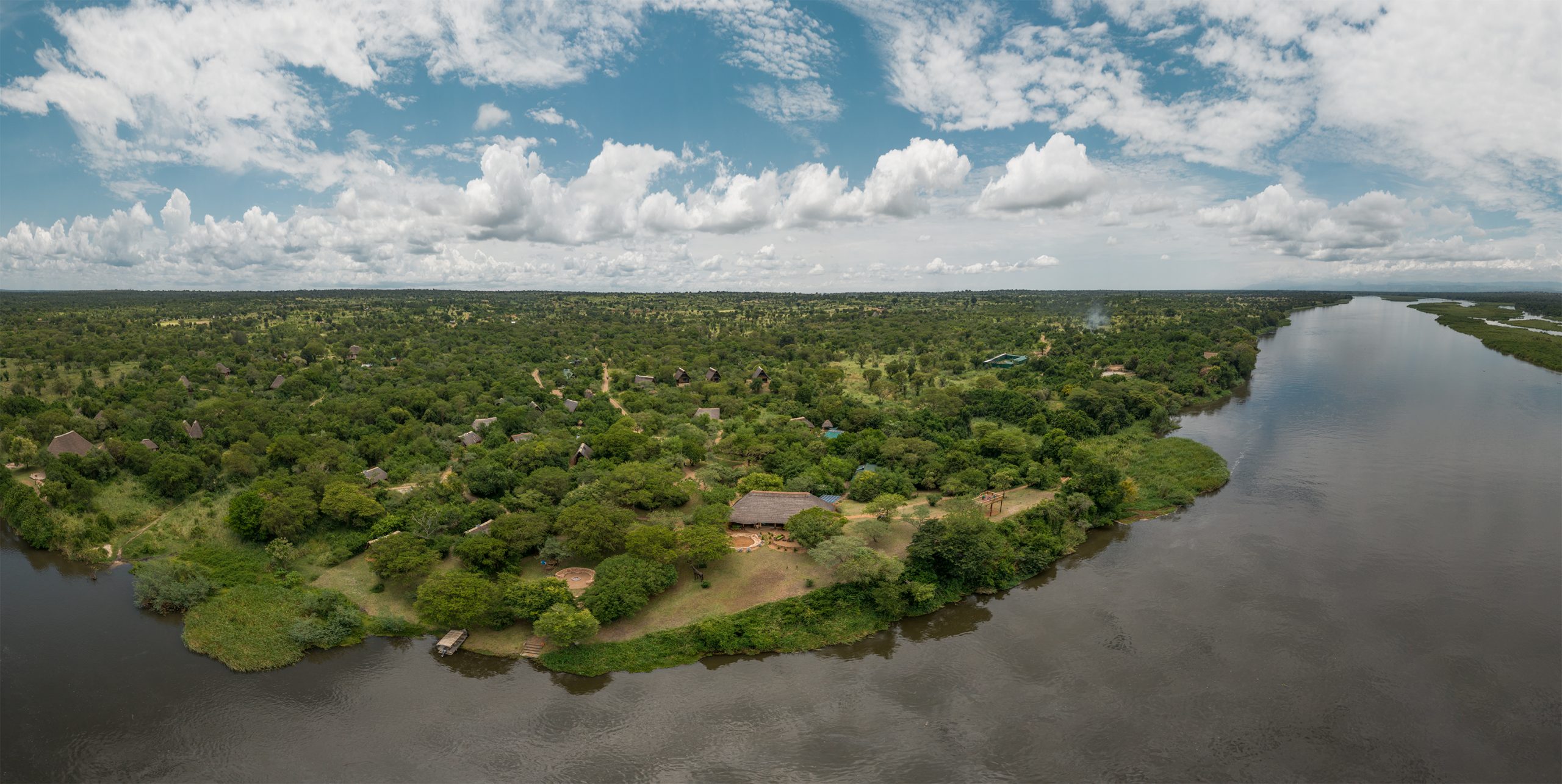
Murchison Falls National Park is the largest national park in Uganda, straddling the districts of Masindi, Nwoya, Kiryandongo and Buliisa covering an area that is equivalent to 3893 square kilometers, and is the most visited destination among the conserved areas of Uganda. Earlier, the conserved area was known as the Kabalega National Park. In 1862, John Speak and Grant, known as some of the greatest European explorers, discovered the national park; in 1864, the national park was thoroughly discovered by Samuel Baker and Florence Baker.
Besides its stunning beauty, diverse wildlife, and breathtaking views, the park is home to the Murchison Falls, the world’s strongest waterfalls, where the Nile River squeezes itself into a 7-meter-wide narrow gorge and plunges 43 meters down, forming the Victoria Nile and emptying its waters into the Albert Nile.
The name Murchison came after the visiting of Florence Baker, who named it in recognition of the former geologist Sir Roderick Impey Murchison, the president of the Royal Geographical Society by then (from Scotland).
Having been visited by so many prominent people like Theodore Roosevelt, the late former president of the USA, and members from the Royal Family of Great Britain, this brings it to the frontline of the most recognized safari destinations in the world. Not to forget the Ernest Hemingway who survived a plane crash while on a visit to the park.
Unique Biodiversity
MAMMALS
The big five: The park contains elephants, buffaloes, lions, and leopards. In addition to rhino tracking, on your way to Murchison Falls National Park, you can also visit Ziwa Rhino Sanctuary for the full package of the big five game. Other large mammals: Herds of giraffes, Uganda Kobs and the endangered Rothschild’s giraffes are also seen in the Buligi plains.
Primates: While the park has various primates like colobus monkeys, vervet monkeys, and red-tailed monkeys, you can also find chimpanzees in the Kaniyo Pabidi section of Budongo Forest.
BIRD SPECIES
For over 450 bird species within the park, a tourist is able to see various bird species such as the shoebill stork, Goliath heron, Abyssinian ground hornbill, and kingfisher within the park, which makes it a good destination for birders.
The park’s landscape accommodates open savanna, Borassus palm and acacia woodlands, tropical rain forests, and extensive wetlands, which provide various species for different wildlife species.
Vegetation
The park is known for plant species like the sausage tree and papyrus reed, which are food sources for animals and provide important nesting and habitats.
Aquatic and semi-aquatic:
The Nile River is home to a large population and one of Uganda’s highest concentrations of crocodiles.
Wetlands
Along the shores of the Nile River and its delta, the vegetation is characterized by papyrus reeds, water lilies, and hippo grass, hence giving support to animals like hippos, antelopes, and so many others.
Activities to do in Murchison Falls National Park
Game drives
Game drives, for a tourist to climax the experiences of a game drive while on a safari trip, are a must. A visit to Murchison Falls National Park must be considered. Here the Bulingi plain with savannah and acacia woodland will provide a clear view of so many animals; for example, antelopes, lions, herds of buffalo, warthogs, and so many other mammals are seen.
A successful game drive is recommended on the northern part of the park. For one interested in nocturnal mammals, a guided night game drive is also conducted in the park, hence providing eye-to-eye experience with the predator animals such as leopards, lions, hyenas, and so many others.
Boat cruise experience
There are two primary boat cruises in Murchison Falls National Park offering distinct experiences on the Nile River. Cruise to the bottom of the falls. Cruising to Devil’s Cauldron in Murchison Falls National Park is a thrilling boat trip that takes you to the base of the Murchison Falls, where the mighty Nile River explodes through a narrow 7-meter gorge. The journey offers an up-close perspective of the world’s most powerful waterfalls and is a highlight for most visitors.
The second boat cruise is at the Nile Albert Delta, sometimes referred to as the bird watcher’s paradise. This 4- to 5-hour, 20-kilometer cruise travels downstream from Paraa to where the Nile meets Lake Albert. It is particularly sought after by birders, as the papyrus-fringed delta is one of the most reliable places in Africa to spot the prehistoric-looking shoebill stork.
Chimpanzee trekking
The availability of Kaniyo Pabidi and Budongo Forest Reserve in Murchison Falls National Park harbors a large number of primates. Chimpanzee trekking in Murchison Falls National Park is a popular activity that takes place in the Budongo Forest Reserve, particularly at the Kaniyo Pabidi and Busingiro ecotourism sites. Budongo is home to approximately 600 chimpanzees, of which several groups have been habituated for tracking.
Cultural encounter experience
Visitors can take part in a village tour to learn about daily activities like farming, food preparation using traditional methods, and blacksmithing. The women (Boomu women’s group) are skilled in basket weaving, and you can take a class to learn how they create these very complicated crafts.
Hot air balloon safari
Experience a sunrise or sunset flight over the park, offering a spectacular panoramic view of the landscapes and wildlife. The peaceful drift above the savannah provides a unique vantage point for spotting animals like giraffes, elephants, and herds of buffaloes.
Conservation challenges and efforts
Oil exploration and development
The Tilenga oil project has disorganized the thriving biodiversity ecosystem of the park by digging a fuel pipeline into the park, hence slowing down the conservation efforts. Habitat fragmentation: The Tilenga oil project has involved constructing new roads and drilling sites, which fragment the habitats of numerous species and disrupt their migration.
Wildlife displacement
Noise and vibrations from drilling are distressing sensitive species like elephants, forcing them to abandon their traditional feeding grounds and migrate to surrounding communities. This has led to increased human-elephant conflict, sometimes with tragic consequences.
Pollution
Oil exploration and infrastructure development increase the risk of oil spills and other forms of pollution. A major concern is the potential impact on the Nile-Albert Delta, a wetland of international importance that serves as a breeding ground for fish and is home to endangered species like the shoebill stork and Roth’s child giraffes.
Conservation efforts by the Uganda Wildlife Authority (UWA)
The Uganda Wildlife Authority (UWA) employs a wide range of conservation efforts in Murchison Falls National Park, from high-tech anti-poaching measures to community engagement programs. They have been particularly active in restoring wildlife populations that were decimated by poaching in the 1970s and 80s.
Advanced technology
To enhance surveillance, UWA uses technologies like drones for aerial monitoring, satellite-backed smartphones for ranger communication, and GPS collars for tracking animals. They also use the Spatial Monitoring and Reporting Tool (SMART) system to collect data and identify poaching hotspots.
Intensified patrols
UWA has significantly increased its land and marine patrols to combat poaching, mainly for bushmeat and ivory. The marine unit patrols the Nile, controlling illegal fishermen and poachers who use boats, hence boosting conservation activities.
For those seeking a safari trip experience, Murchison Falls National Park is the answer since it provides you with an experience beyond your expectations, which combines a beautiful landscape for scenic views, biodiversity in an ecosystem that harbors members of the Big Five game such as lions, leopards, buffalos, and elephants, so many other animal species, and various bird species. Dear travelers, kindly book with Ganda Cultural Expeditions for a seamless and memorable safari.


![The Ultimate guide to Uganda’s street food scene [A taste of Kampala]](https://gandaculturalexpeditions.com/wp-content/uploads/2026/03/The-Ultimate-guide-to-Ugandas-street-food-scene-A-taste-of-Kampala.png)