The World of Gorilla Species
Gorillas are the largest living primates native to the forests of Central Africa. The world has only two gorilla species, the Eastern Gorilla (Gorilla beringei) and the Western Gorilla (Gorilla gorilla). These species are further subdivided into two other subspecies of each species.
The western gorilla species comprises western lowland gorillas (Gorilla gorilla gorilla) and Cross River gorillas (Gorilla gorilla diehli).
The eastern gorilla species is subdivided into the eastern lowland gorillas (Gorilla beringei graueri) and the mountain gorilla (Gorilla beringei beringei).
The different two species and the four subspecies come from one type of gorilla during the Ice Age when their forest habitats shrank and became isolated from each other.
Description of the four subspecies of gorillas in the world.
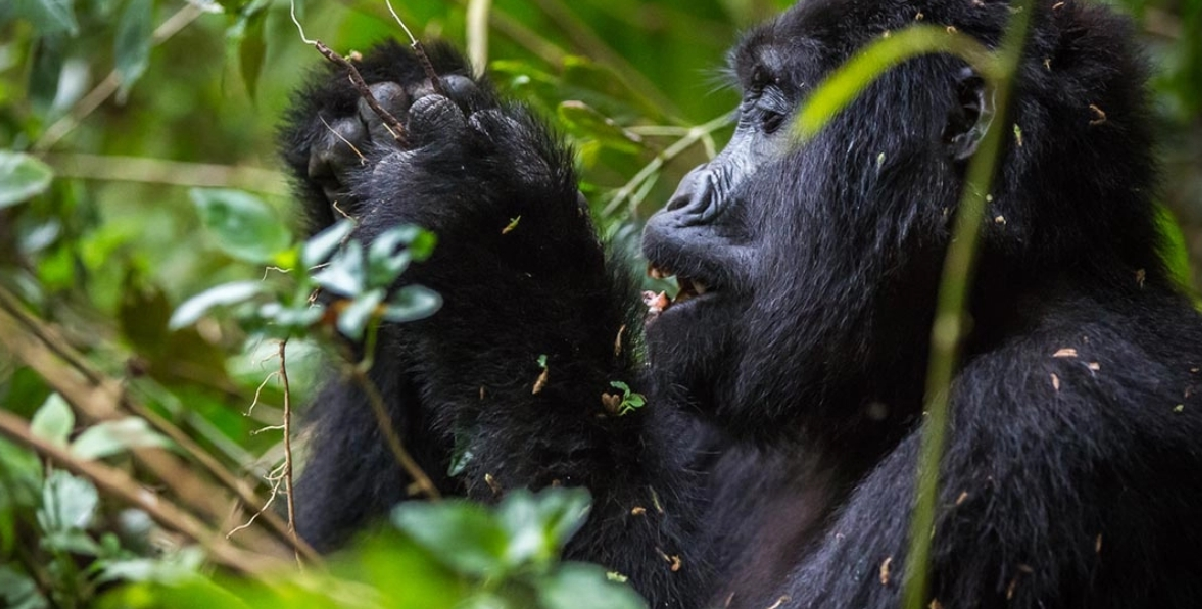
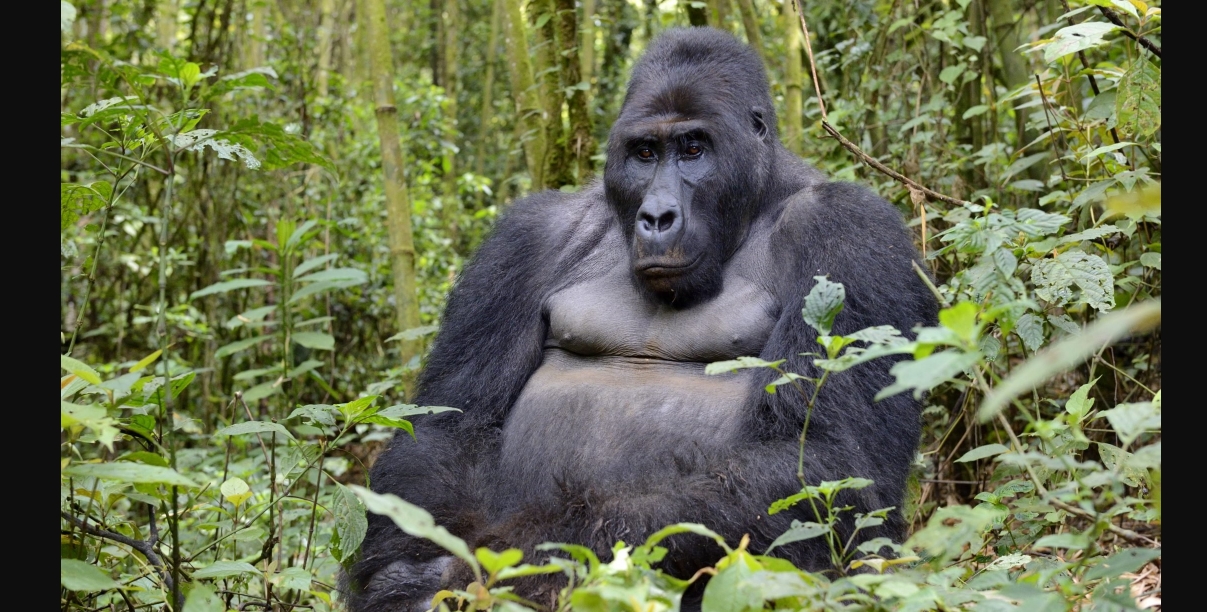
The mountain gorilla is also known as Gorilla beringei beringei.
As the name states, mountain gorillas also live in the mountains at elevations between 2438 and 3962 meters/800 and 1300 feet.
Gorilla beringei beringei has a standing height of 4-6 feet and weighs between 136 and 220 kilograms/350-450 pounds.
This type of eastern gorilla has thicker fur compared to other gorilla subspecies. The fur assists it to live in a habitat where temperatures almost drop below freezing point. There are two mountain gorilla populations in the world.
One population of mountain gorillas is about 459 gorillas living in Bwindi Impenetrable National Park of Uganda; another population is about 604 gorillas, and this population is shared by Mgahinga National Park of Uganda, Virunga National Park in DR Congo, and Volcanoes National Park in Rwanda. This makes a total of 1,063 mountain gorillas in the entire world.
Eastern Lowland Gorilla (Gorilla Beringei Graueri).
Eastern lowland gorillas are the biggest subspecies of gorilla and the biggest living primate, weighing over 250 kilograms. They have a maximum height of about 1.85 meters/6 feet. Like the mountain gorillas, the eastern lowland gorillas have black coats; however, the hair is shorter on the head and body.
This subspecies of Eastern Gorilla is only found in the eastern Democratic Republic of Congo. Because of civil wars in Congo, this area has been isolated due to the difficulty in accessing it; hence, little research has been carried out, which has led to limited information about the Eastern lowland gorillas.
Gorillas beringei graueri are the most at risk of the four gorilla subspecies. The total number of this entire species is about 3800 gorillas; some researchers have indicated that the number is declining at a rate of 80% in the last twenty-five years. The relatively small number that make up the group and the rapid decline have brought the species at risk.
Primarily poaching has also been recorded as one of the major factors in the decline in the population, which has flourished during a long period of civil unrest in the region and illegal mining for components used in small electronics like cell phones.
Western lowland gorilla (Gorilla gorilla gorilla).
Western lowland gorillas are the smallest of the four gorilla subspecies. This type of gorilla weighs in between 165 and 180 kilograms, that is to say, about 350–400 pounds, having a standing height of 4-6 feet. This type of gorilla has shorter black-brown hair, a distinguished ridge along their brow, and longer arms.
Gorillas (Gorilla gorilla) are the most numerous and widely distributed of all the four gorilla subspecies. About 100000 western lowland gorillas have been recorded on earth today.
The western lowland gorillas are the only species of all gorillas that is kept/caged in zoos around the world, with the exception of Amahoro, a female Eastern lowland gorilla at Antwerp Zoo in Belgium.
They live in primary forest, secondary forest, montane areas, and lowland swamp areas in central Africa in Angola, Cameroon, Equatorial Guinea, and Gabon. However, due to decreasing population, they are currently classified as critically endangered.
Cross-River gorilla (Gorilla gorilla diehli).
The cross-river gorilla is the rarest great ape in the world. It is recorded as critically endangered on the IUCN Red List with a population of about 250-300 individuals. They are found in the mountainous areas of Nigeria and Cameroon at the top of the Cross River, after which they are named.
Compared to the western lowland gorillas, cross river gorillas have smaller cranial vaults, shorter skulls, and smaller palates. They weigh between 145 kilograms and 200 kilograms and have a standing height of 4-5 feet.
Whoever is interested in apes and large primates, gorilla trekking and chimpanzee trekking are conducted in Uganda in Bwindi Impenetrable National Park and Mgahinga Gorilla National Park. However, one should know that only one species of all four can be trekked in Uganda and other surrounding national parks like Virunga National Park and Volcanoes National Park in Rwanda.
Note: A tourist will have to book a gorilla permit, which is about 800 dollars, with the Uganda Wildlife Authority (UWA) to enable him/her to successfully experience the activity of gorilla trekking. On the other hand, Ganda cultural Expeditions is the number one tour operator that is readily available to assist you in the gorilla journey. kindly book with us at info@gandaculturalexpeditions.com