What are Gorillas?
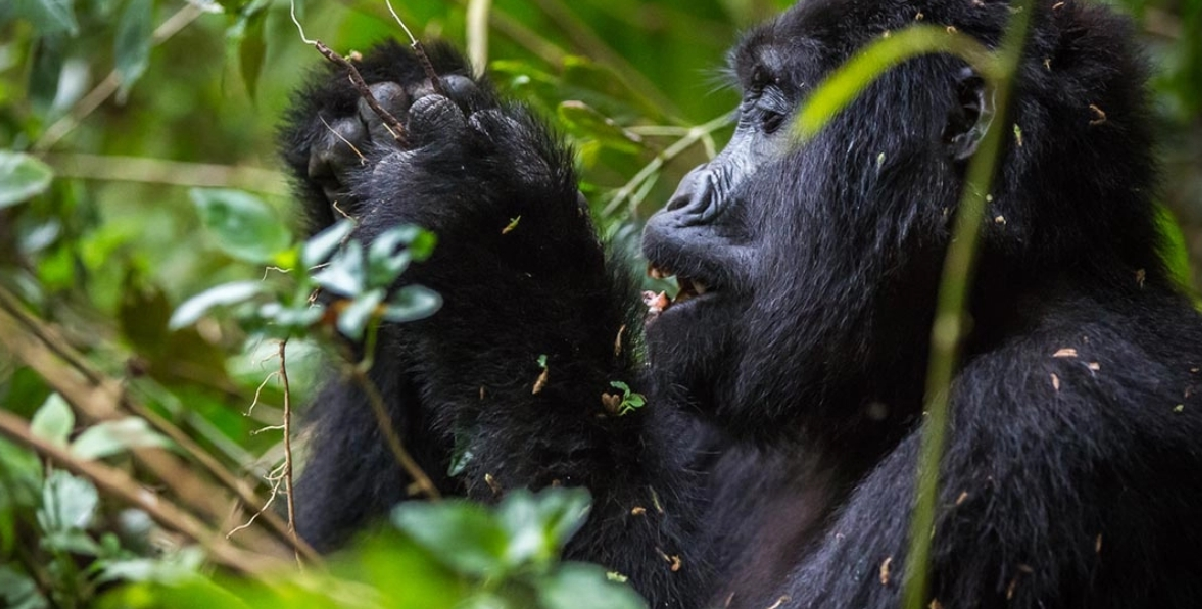
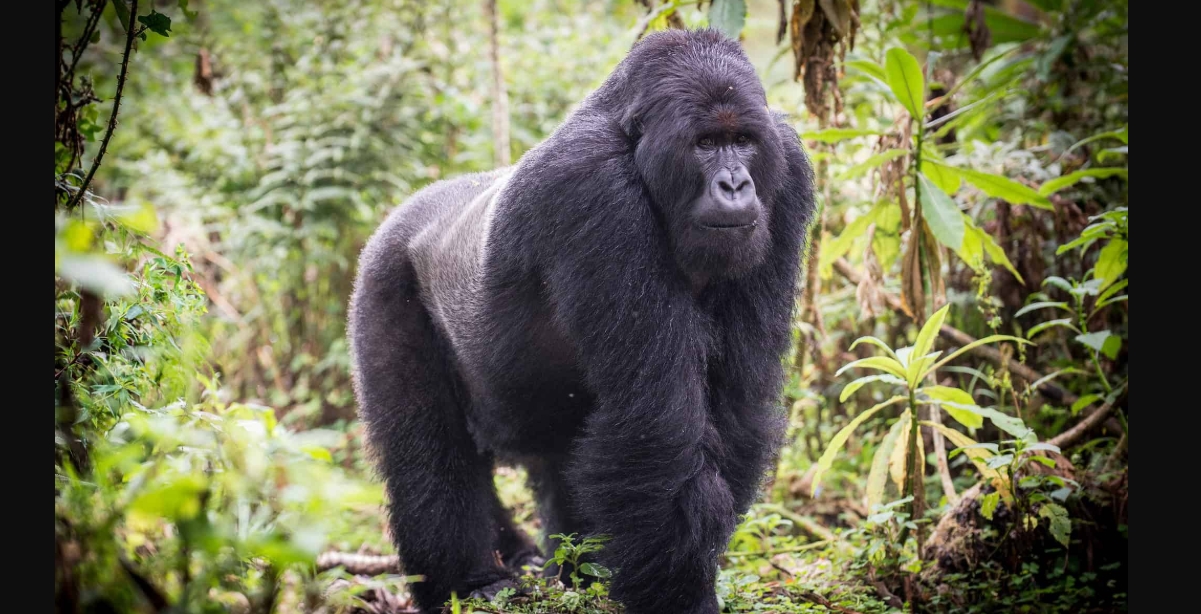
Gorillas are the largest living primates native to the central African forests; they belong to the genus Gorilla. Besides their size, male adults can weigh like 400 pounds; they are gentle, intelligent herbivores that live in close-knit groups. Being the largest of the great apes, which are orangutans, chimpanzees, humans, bonobos, and gorillas, gorillas have muscular arms longer than their legs.
Gorillas are large, powerful animals with strong, distinguished chests and shoulders, and their hands are similar to those of a human. Whoever is interested in primates should not be mistaken or misguided on a gorilla and a chimpanzee; however, they are likely to look alike, but they have a lot that differentiates them.
Primate enthusiasts should note that gorillas are larger, more robust, and typically herbivorous, whereas chimpanzees are smaller, slimmer, and more omnivorous. Other vital differences between a gorilla and a chimpanzee are that a gorilla has smaller ears and a black face, whereas a chimpanzee has prominent ears and a pinkish face.
Scientific classification
Class mammalia
Phylum Chordata
Family Hominidea
Kingdom Animalia
Order Primates
Tribe Gorillini
Genus Gorilla.
Gorillas have both black skin and hair but lack any hair on their face, feet, and hands. The chest of a male is bare, and simple eyes are set into a hairless face.
Species of Gorilla
There are two species of gorillas, which live in Equatorial Africa (located near the Equator line), separated by about 560 miles of the Congo Basin Forest. Each species of gorilla has an upland and a lowland gorilla.
The western and eastern gorillas each have two subspecies. All four subspecies of gorillas are listed as endangered or critically endangered due to habitat loss, poaching, deforestation, bushmeat, and disease.
Gorilla Social Structure
Gorillas have a well-organized and sophisticated social structure, staying in family groups typically ranging from 2 to 50 individuals.
The family is typically made up of one or two males (silverbacks), females, infants, and young adult males (blackbacks). The silverbacks head the family, and the dominant male(s) can hold on to their position of ‘head of the family’ for many years.
When a male reaches maturity and adulthood, he will either leave the family and form his own range nearby the old family, or if the adult remains with the group, that is an indication that the male is the offspring of the dominant male, and that offspring will later take over leadership of the family.
Female gorillas leave their family at maturity to join other groups or single males.
The life cycle of the gorilla
A female gorilla gets sexually ready at approximately 7-9 years old but does not start breeding until a few years later, and a male gorilla does not start mating until the age of 15-16 years.
Gorilla gestation period
Female gorillas produce about once every four years. The gestation period is approximately eight and a half months (256 days), and they give birth to only one baby. The female will only have 3-4 babies in her lifetime. This slow rate of reproduction makes it hard for gorillas to recover from population declines.
Gorilla life expectancy
The average gorilla life expectancy in the wild is between 30 and 40 years. Female gorillas leave their group at maturity to join other groups or single males, also to start up a group.
Communication
A gorilla is a quiet primate and totally shy by nature. To communicate, a gorilla uses a number of calls, including hoots, grunts, barks, and roars, which are made by aggressive males.
The gorilla is a calm and non-aggressive species, except when it is disturbed. Unwanted visitors are met head-on by the group’s silverback, who will show aggressiveness to fend off the unwanted visitors and protect his group. This aggressive display mainly involves vocal roars, chest beating, and rushes towards the intruder.
Chest beating is performed by both males and females. Chest beating is part of a ritual that may also consist of tearing at vegetation, running sideways, and slapping the ground. In addition to intimidating visitors, these displays also act as communication between groups and are often used to keep the dominance hierarchy within the group.
What do gorillas eat?
Gorillas are totally herbivorous mammals; these large primates are mainly vegetarians, living on bamboo shoots, fruits, and stems, complemented with bark and invertebrates. Western lowland gorillas have been known to feed on the larvae. you can only have the gorilla experience in only three countries in the world namely Uganda, Rwanda and Congo where by Uganda shares the biggest number of Gorillas. Dear travelers, kindly book with Ganda cultural Expeditions for an immense gorilla experience.